Tuesday, May 26, 2020

We Still Need Hope

     Coronavirus and the road to recovery post pandemic shutdowns has felt like Groundhog day. Wake up, get stuff done, eat, finish to-do's, keep the kids healthy- happy and entertained, eat again, sleep, repeat. The days just continue to blur together. And while we are working on returning to normal, planning for the future still feels overwhelmingly impossible for many of us. We are living in an infinite present. We aren't sure if we can or even if we should make future plans for vacations, holidays or weddings. Every day feels like an endless today, and tomorrow feels just out of our reach.

Be happy jar- mason jar filled with verse, quotes, things I like ...     Originally being present felt like a surprise gift. It felt good to slow down and just be in the moment with our family. But as summer gets into the swing of things, the fears and anxiety we've been facing over the past few months begin to melt away. And we are left yearning for those family adventures we look forward to every year. Because anticipation of something - even if it's just a friends get together or trip out of town - can often be as enjoyable as the real thing. However, this summer is different though. So if you're asking yourself if it's okay to plan trips right now while gas and flights are cheap and you just aren't sure yet. If you're considering family outings and adventures, but are hesitant. If all this uncertainty and inability to plan for the future has you feeling down and like this is the May that will never end then try this little activity out as a family.


     Every time one of you wishes you could do something, go somewhere, see someone, have a treat, or enjoy someone's company just because or for a celebration of something... write it down. Get a slip of paper and stuff it into an obvious place that you frequently pass. No matter how small the activity is. Wishing you could have a double scoop sundae? Write it down! Want to feed the ducks? Into the jar it goes. Sad that your scouting trip was cancelled and wish you could go camping? Add it to the list. Now you have a jar of potential magic. These are the things you get to enjoy together once you feel a little more certain about everything that is going on. This is your post coronavirus 2020 family bucket list. This is hope for a better tomorrow. Now we have things to look forward to and plan. Things to get us motivated and on track again; not just as an individual, but also as a family. And as you get to work your way through these fun outings and little adventures you're not only making 2020 the best it can be you're also reminded of all the wonderful things in our lives we have to be grateful for.

Happy planning!

#RaiseAWarrior 


Wednesday, May 20, 2020

Setting the Tone In Your Home

Anger Management: How To Keep From Losing Your Job | Glassdoor    We are all finding our new normal right now. And while going back to work may be a love it or hate it situation for you, we don't want to lose the positive momentum we've been building with our families during the shelter in place. So how do we keep up that great sense of connection? How do we keep that family centered focus? How do we find that better balance between work and play?

    Surprisingly a huge part of that happens when you first set foot in your door. I mean imagine this. Your family has been relaxing. They've watched tv, they've played with friends, they've been to day camp, they've just been chilling, having fun and being a family. But you've had a rough day. Being at work while the rules are constantly changing is frustrating beyond belief. You're not in the best of moods. You walk in the front door or you pickup your kiddo. It's almost as if you've thrown a bucket of ice water over everyone. You don't even have to open your mouth. Your mood is palpable and it just shatters the peace that had been there moments before. Isn't that the opposite effect we want to have on the people we care about? So this week we're tackling why this is so important and positive ways to manage this without it affecting our loved ones so negatively.

Why Bringing That Frustration Home Isn't Optimal

     1) Anger blocks awareness: When we are firmly rooted in our own problems and struggles, we lose our awareness to things happening outside of us. This isn't great for several reasons. One is when we're locked inside our head we don't see the effects we are having on our loved ones. And two, when we are focused solely on our own demons we completely lack empathy and aren't able to recognize when our family or partner need us. In both of those instances we are emotionally unavailable and not able to reach our family or positively impact them. We might as well not be present.

Top 20 Calm Down Memes Everybody's Sharing | SayingImages.com     2) Bad moods spread: Our emotional state is contagious. Ever heard "if mom's happy everyone's happy?" This simple principle applies to everyone in our home. If you're super frustrated, terse, and snippy those feelings spread. Soon everyone in the house is in a bad mood, frustrated, and argumentative. Not our idea of a good way to end the day.

What To Do Instead:

     1) Take a few minutes: Most of the busy activities we normally rush too and from remain closed. Little is so dire that we can't take a few minutes to collect yourself. If your angry or upset, take a moment to process your frustrations BEFORE you come home or pick up the kids. Take a few minutes to walk around the parking lot, ride with the windows down and feel the breeze. Pull into your favorite drive through and grab a treat to take home and share. Do something that pulls you from your frustration and into the here and now.

     2) Vent later: A lot of parent's want their child to view them as their best friend. While these intentions are good, they can cause a blurring of boundaries and that has severe consequences. So don't vent to your child. Even if they're a little older and know you well enough to ask what's wrong. The sooner we put adult problems onto our child or on their radar the sooner we end the carefree magic of childhood. So don't do it with your child. If you need to vent lean on an adult. Feel you're not ready to share, try expressive writing. Some people destroy these written pieces afterwards and it can be very cathartic, but do not put your stress on your child. Only involve your child if they are older and it is a decision that affects them as well.

The Benefits of Family Movie Night     3) Throw yourself into making your family happy: If you don't think you can take a few moments for yourself or can process this in a timely manner then try taking a break from your own problems and focus on others. As a family go on an impromptu ice cream run, take a walk, have a picnic, go for a bike ride, put off evening duties and have a game or movie night. When we take the focus off of ourselves and invest in making our family's day better an amazing thing happens. You also start to feel better. This lifts your mood and gives you some clarity of thought that anger and frustration doesn't give. Later on, when you have some time to yourself, you will be ale to look at your situation in a new light.

     The bottom line is we want to raise our families up. Sometimes we will struggle and fail. It happens and it is okay. There is a lot on our plate and these are unprecedented times. You will mess up and you will beat yourself up over it. Every good parent does this from time to time. But constant shame and self-criticism isn't productive. Use that guilt to make a plan and motivate yourself towards improvement. When you mess up use it to push yourself towards better. If we are constantly trying to be our best and improve we are giving our family the very best we can. Not perfectly, just one step in the right direction, one positive memory and interaction at a time.

#RaiseAWarrior 


Tuesday, May 12, 2020

Anxiety or Bad Behavior?

Is it anxiety or acting out? | Children's National
    Poor behavior in children doesn't magically happen. There is almost always an underlying cause. And while it can be next to impossible for us to solve that puzzle in the thick of it, we can potentially prevent its occurrence. We do this by looking ahead. By becoming aware of the environmental variables that are coming up in our lives (preferably before they happen). When we start to recognize these potential stressors it becomes much simpler to predict our child's natural response to it and the behavior that might arise.


     For example, as we begin to emerge from shelter in place what might your child experience and feel while we strive to find our new normal? Continued anxiety and fear about the coronavirus? Uncertainty for the future? Might they be afraid that they could suddenly be confined to the home again for months on end? Do they have concerns about being separated from you or about your safety as you go to work? Looking ahead we can see these are very real stressors. So how does all of that anxiety affect our child's behavior?

    When most of us think of anxiety we think of the stereotypical timid child. The one who is very clingy, who retreats away from people, doesn't speak when spoken too, and cries when separated from their parents. That isn't always the case. Anxiety in children can be manifested in many different ways. Some kids don't withdraw when anxious. Some kids natural defense mechanism is to "fight" when they feel threatened rather than to go into they typical "flight" mechanism of anxiety. And no matter the response to anxiety the body is ready for some intense activity. The kid's whose natural anxiety response is to "fight" are the kids who act out. They are the one's who are defiant, and angry because of their fears. They are sensitive to criticism. And they can be a handful when their anxiety goes unaddressed during times of stress and change. That bad behavior truly is just the tip of the iceberg. We have to look below the surface to get to the root of the issue. So if we foresee ending our shelter at home as a big stressor for our child there are the steps we can take today to decrease their anxiety and prevent bad behavior during change.

Anxious Kids, Anxious Parents | Anxiety & OCD Experts | Cognitive ...Address Emotions Before Big Changes:
     Our children (even the older ones) are still learning how to name and work through their emotions. Taking the time to help them do this before a transition is pivotal. We can't always do this (like in times of unexpected injury, or death), but for many life transitions (be it work, home, relationships, or ending shelter in place for example after a pandemic) we can see that coming up from a decent distance away. Life can take us by surprise, but we generally have a plan and think about our big moves before putting them into affect. So to decrease anxiety and concerns start an open family dialogue. Take turns saying what you look forward to and what you're afraid of. With the younger ones note how they express emotions in art and creative play. A child who plays while wearing a mask or one who suddenly is only playing doctor or nurse may have concerns of getting sick after the return to life. A child who plays at quarantining their doll as a punishment may be fearing the powerlessness of quarantine happening again. So clear the air and work through some of those fears before hand. You'll see less anxiety and acting out at that first drop off if you do.

Stay Calm:
     When our children misbehave it tends to escalate pretty quickly. Sometimes it is because they are ready to go and all that energy and emotion has to go somewhere. But sometimes it is because we lose our cool. It is difficult to teach a child emotional management when their behavior is consistently earning an emotional reaction from us. We have to model a better way. So stay calm. Master your own emotions before you attempt to address theirs and the behavior. 

Be Consistent:
     We have to be consistent in how we handle misbehavior. Which means we have to decide and have a strong front before the anxiety and behavior begins. Just because we believe our child is anxious does not make it okay to hit others, use unkind language, tell us no, throw a fit, or demand things of us. And so whether it is emotional behavior or not we must remain strong. Because intermittent reinforcement, even if it is just you giving in sometimes makes a behavior that much stronger. We do not want our child to learn that their poor behavior sometimes leads to what they want. This means we have to be careful giving their anxiety and fears too much attention also. If their anxious acting out buys them more time with you, or attention from you then we are cementing this behavior pattern. We are teaching them to continue to overwhelm and try to badger their way into a yes. Calm consistency is key for managing any misbehavior.


50 Best Family Quotes - I Love My Family Quotes    The main thing is to realistically view your families life and the stressors they are experiencing. We are all in this together. We are all learning and growing through this as a unit. And we have to begin recognizing the subtle signs of anxiety. Is my child anxiously acting out or are they truly behaving badly? Because if we do not address the reason for their anxiety those problems will continue to escalate. We have to name it to tame it. Being firm and correcting the behavior with punishments or consequences won't be enough to end this cycle. It works for bad behavior, but not when it is caused by unaddressed emotions like anxiety. By understanding the anxiety is the problem to tackle it changes our approach. Now we can join forces with our child. Now we are a team attempting to work through anxious situations. It sounds a little labor intensive in the beginning, but it truly is the same amount of work as dealing with the aftermath of a complete melt down. So prepare for the changes your family will go through as you find your own path and method for re-joining society post the COVID-19 pandemic. Transitions can be difficult, but by taking the time to lay this groundwork and make a plan you are truly making the time ahead easier for both you and your child.

#RaiseAWarrior 


Life Lessons: Being Safe vs Being Careful

New Research Shows 'Risky Play' Makes Kids Safer | Fatherly     Shelter in place has us all itching to get out and be on the move again. So whether your family is ready to jump right in and do all the things or if you're cautiously taking it slow, this freedom means more activities are available to us. And as things start to warm up we definitely tend to shoo the kids outside more and more. And every time we do, whether they are bike riding, playing in the backyard, climbing a tree, or just sitting outside we caution them to "Be careful." We can't help it. It's almost habit at this point. And as our child's protector we feel reassured after sharing those two little words. But does saying "Be careful" like a broken record have the effect we want? Does it have benefit at all or is there perhaps another lesson being unconsciously taught?


Why "Be Careful" Doesn't Work

And everybody loses their minds Meme - Imgflip     1) Be careful is too broad: What should your child be watching out for? Snakes? Their little brother or sister? Slippery rocks by the pool? Sunburn? Poison ivy? Bugs? "Be careful" is so broad it has become practically meaningless. So pick something more specific and stop repeating the same inane message. Take that spare second to give your child more guidance. What should they be wary of? When we provide an explanation of what they need to be careful of and why it is more likely to stick. Emphasize what will happen if they don't proceed with caution. Now your warning actually serves it's purpose and is more likely to be taken to heart.


     2) It is fear based: "Be careful" seems harmless enough. I mean after all our intentions are full of love and a desire to keep our child out of harm's way. But "be careful" has a very fear based message. It doubts their judgement and their abilities. A child who was fearlessly climbing a rock wall will now hesitate and doubt himself when he hears those little words. Because "Be careful" is teaching our child to fear - the unknown, trying new things, making mistakes and taking risks. It can make your growing child overly cautious and anxious. And if their fears continue unchecked it can grow uninhibited and lead to them missing out on many opportunities and adventures that life has to offer.

Instead Teach Them To "Be Safe"

     1) It's empowering: When we tell our child to "Be safe" instead of "be careful" it softly lets them know that we trust their judgement. It says we believe in their abilities. A child that is told to "Be safe" understands that bad things can and do happen. "Be safe" also tells them that it is okay to take a few healthy risks and consistently challenge themselves. These two little words are empowering and they will help your child take risks, be bold, and get ahead in life.

7 Ways to Raise Strong Kids - iMom
     2) It teaches awareness: Earlier we mentioned that "Be careful" is too broad and becomes one of those meaningless parenting phrases that isn't much help to our children at all. When we tell them to "be safe" we can make it much more specific to their developing skills and the environment they're entering. "Be safe and look for cars" teaches awareness and safety while playing near a street. It is not too broad and it is not a meaningless warning. "Be safe and look before you step" teaches a child to not only check for footing, terrain, but also wildlife in the area. This is great advice, and a great lesson to remind them of before they play outdoors, or before taking a walk.

     3) It promotes problem solving: Kids are learning while they play. And they will make some bad calls. Instead of yelling "be careful" or "drop that" in the middle of their mock battle with sticks while swinging from a tree like wild men help them practice their problem solving by asking "if they're being safe?" Prompt them further with a "what could you use instead as a weapon?" or "what might happen if they miss and actually hit each other?" You're effectively not only reminding them to be safe, but also to be aware of what outcome their actions might have, and to come up with a better plan. 

     So try breaking the "be careful" habit. Although your intentions are pure children need more information and the lesson in "be safe" is stronger. This doesn't mean they'll always listen to you. Some hard lessons you just have to learn for yourself. So give them the freedom to try, to push themselves, to take a few risks. Because those who are willing to stretch themselves and take a few risks are the ones who truly thrive later in life.

#RaiseAWarrior 


Thursday, May 7, 2020

Quarantine and Helicopter Parenting


     We've talked a lot about how this pandemic and shelter in place has granted us a lot of time. Time with each other, time to relax, time to let loose, and time to play. However, many of us have been struggling to adjust and I mean really struggling. We are fighting tooth and nail for control. We cling to control in whatever small aspect we can find it because we have zero say in the uncertainty and the fear of this whole pandemic situation. And control can be good. It is good to control the amount of snacks your family is munching on. It is good to control the amount of electronics we use. But too much control, especially in parenting, can become a bad thing.
Too much love: helicopter parents could be raising anxious ...
     During quarantine especially it is very easy to teeter into the realm of too much control. I mean we are around our family all day every day now. We are in charge of seeing them schooled properly, their martial arts training, and any other extra curricular activities in addition to the usual parenting tasks of caring for and raising strong and kind youth. And that is a lot of hats to be wearing. But if we are living quarantine completely inflexible we aren't going to be successful. So here are some ways to curb the quarantine helicopter parent that is coming out in many of us.

Have realistic expectations
     The online program has been awesome because it has allowed us to stay socially close to a lot of our Warrior families while remaining physically distant. And across the board school work has been a challenge for everyone involved. So calm your inner helicopter parent by making sure your expectations are realistic. They are not at school. They will not sit for hours and be focused and engaged. You are not their teacher. They will respond differently to you and that's okay. Schooling at home will have a very different pace. This is new to everyone and there are lots of distractions and fun things to do at home. So be realistic and create something that works for your family. The same goes for their martial arts training. It will be difficult for some kiddos to get into online training. Once again that is perfectly fine. Take your time. Be patient. Do the parent lessons with them until they are more involved again and can start taking some initiative and training on their own. The end is in sight.

Let them be bored
     When we go into full helicopter mode we try to plan everything for everyone. And while our efforts are noble, us making everything right and fun and happy 24/7 is actually not great for our child in the long run. It is okay for children to be bored. It is healthy. It forces them to think outside the box and take ownership of their own happiness. Their ability to discover what they love and hobbies they enjoy now will help them find happiness during stressful times in the future. So let your kids be bored. Give them room to stretch their creative muscles and discover some things about themselves. Because having everyone's day planned and entertaining minute to minute isn't just bad for them, it's also exhausting for you.
How to deal with a kid who's always bored - Today's Parent

     The bottom line is the easy path (in life and in parenting) is rarely the right one. It is easy during uncertain times to seek coping by exerting greater control in our personal and family lives. It is easier to swoop in and make everything right than risk letting our children fail or hurt. However, constantly clearing the path and making life easy for our child is doing them a disservice. Because a child who doesn't face adversity isn't building coping skills. A child who's obstacles are so removed they are never disappointed, won't be able to manage day to day life in the real world. So although it's easy to become a quarantine helicopter parent we cannot. We must resist. Although we crave control during this out of our hands situation we cannot seek that feeling by exerting it overtly on our families. So be a sounding board. Don't fix everything for everyone. Check your expectations and let them be bored. We're nearly through this Warrior parents! And we've got this!

#RaiseAWarrior 


Cultivating Attention In A Distracted World


Image result for distracted kid

     Let's be honest. Children are easily distracted. This has never been more apparent than while battling with your child to do their school from home while video games are singing their siren's song in the next room. Many parents would just brush this off, saying it's a "fact of life" or that their child has "the average attention span" for a child of their age group. Doesn't that start to sound hollow after the 4th or 5th time? And why do we feel the need to justify our child's lack of attention? If we continue to normalize such a low standard of attention that "average attention span" will continue to decrease. So where are we going wrong?

     I mean if we're honest, it isn't just the children who are easily distracted in today's world. Everywhere we look there are things pulling for our attention and our time. Take your cell phone for example: how often does it go off on the average day? And how long can you let it sit before you give into the distracting urge to check and see what the latest message is from? Many of us cannot wait long. The reason for this is the distraction has become habitual. We crave the break from routine. And the industry knows this and is constantly trying to hijack and divert our attention with push notifications, reminders, and apps meant to feed our instant gratification mindset. Now does this mean our devices are the problem? No, not in the slightest. They are a factor, but we are not entirely guiltless.  The problem is we have all lost our ability to own our own attention. We pride ourselves on our multitasking skills, but in reality our split attention is frequently focused on the wrong thing. So here are some ways to check the distraction in your own life and bring the attention back to what really matters- raising the strongest and most prepared child you can.

Gradual Time Reminders
     Any parent who has tried to pull their kids focus away from a video game or the television to begin their homework or get ready for bed has experienced this one. A child who is engaged in something they truly enjoy will be reluctant or even angry when they are suddenly expected to stop what they're doing. And we can understand that feeling if we put ourselves in their shoes. I mean the Monday blues were real pre-quarantine after a truly enjoyable weekend away from work. So give them little time reminders. Set 5 or 10 minute timers and gently remind them once or twice what is coming up next. Give them a chance to exit the immersive world they've been lost in and help them mentally prepare for the next big thing. You'll be amazed at the decrease in emotional outbursts and confrontation this can bring to your home.

Image result for kid dressed themselves
Teach Sequencing
     A lot of children, especially the ADD and ADHD ones have a hard time picturing what the finished product looks like. So they'll start a task with great intentions, but then they cannot see the end goal and their focus gets lost along the way. They have to learn how to break big tasks into smaller steps and then how to follow a sequence of steps through until completion. So how do we start to teach this skill? One way to teach sequencing is to use the "Get Ready - Do - Done" methodology (this helps children still mastering sequencing and also those struggling with anxiety, in addition to the ADD, and ADHD kids mentioned before). This method is great because it makes the planning visual. You are removing the mystery/confusion of a task by showing them what finished looks like. So if you want your child to do start their school work or their online martial arts training on their own you would pull out an old picture of them ready for martial arts class or doing their schoolwork at the table to give them that mental picture of what finished looks like. Depending on the child's age you might also need to point out elements needed to accomplish this goal (i.e. laptop, notebook, writing implements; or if training - electronic device, clear space, training equipment). Then you let them go. Afterwards you both compare what they managed to what the goal really was. This may take a few tries to become a habit, but by teaching them to plan then work, and then work the plan you are preparing them for success not only in school, but also the workplace, and beyond.

Image result for yelling memeNo More Yelling
     Have you ever shouted across the room or the house to another member of your family? Do you get a half-hearted "yeah" or "uh-huh" in response and then later denials of ever having had that conversation? It happens all the time in our home. Listen Warrior parents. We get it. We know parenting is a delicate juggling act and sometimes it just seems easier to shout for someone's attention because we feel it saves time. This is a parenting pitfall, however, that sets all of us up for failure. When we yell across the room we don't truly have our child's attention. They respond out of habit because they've learned it's expected of them. They aren't truly listening to us and are still more focused on their activity at hand. Often our yelled instructions to "get ready for martial arts class/dinner/homework etc." won't even register. So let's all cultivate attention by building better habits of communication. If we can't be bothered to make sure we have our child's attention, we can't be surprised that we never had it in the first place. Instead of yelling across the room, go up to your child, get on their level, make eye contact, use a gentle hand on the shoulder. Be empathetic. Be clear. Teach them that good communication requires sharing your undivided attention for a few precious moments in time. Children are much more likely to listen when they feel seen, heard, and understood by you regularly.

Explain Instead of Order
     No one enjoys being talked at or told what to do. And let's be honest, children are inquisitive. They are constantly wanting to learn and understand why something is just so. You can total drill sergeant if you want to. There is a time and a place for ordering your home about. And battles of wills and assertions of independence will happen somewhere along the way. Not every task has to be an uphill battle, however. When we get a child's attention and directing their understanding to why a task is important you are forced teaming with them. You are no longer matched against each other for dominance. Now you are on the same side, and the same page trying to accomplish a common goal. If it works in management it absolutely can work in your home. So take an extra moment to explain why the next task is important, it might just save you a headache in the long run.

Image result for routine meme
Routines Are Your Friend
     When all else fails routines are your friend. Routines help us build habitual attention. It gives a growing child a sense of security because they know what to expect next. And it is a great way to combat character hurdles like procrastination or laziness because if we're on autopilot sometimes it's just easier to get those undesirable tasks done. For example I am not a morning person. Never have been and never will be. I just do not wake up bright and perky. So in building a routine I can focus on one step at a time until I feel a little more human and am able to safely join society without snapping at anyone. I lethargically nurse a cup of coffee while listening to a podcast. Am I listening exceptionally close? No. Does it wake my brain up some and make me feel productive? Definitely. At a predetermined time my phone automatically starts playing a pumped up wake up mix of upbeat music. I take a shower and get ready for the day. Often I don't even notice all of this happening, but by the time I am done I feel like a complete human again. Is this a strength of mine, absolutely not. Have I cultivated a routine to keep myself on track, yes. So try it with your family. The order and routine that works for us can often help a struggling child.

     Overall cultivating attention (especially when our normal routines are gone and there is so many distracting things at home) will be a journey for the whole family. We must learn to observe where our mind and emotions are and teach our children to do the same. We must recognize what led us to this distraction and then learn ways to combat our own inattention. Maybe that means you become a super planner and maybe that means you just need to build some routines. Bottom line is that there is immense power in being present and attending to the moment at hand. So teach your child to work hard and give one thing at a time their full attention. Because cultivating attention is a gift that keeps on giving. 

#RaiseAWarrior 


Monday, May 4, 2020

A Secret For Managing Stress and Anxiety


     Managing our emotions and stress is one of those skills that makes us successful in school, in our careers, and in our relationships. And unfortunately it is a skill that some people never manage. As parent's we want to be the spring board of our child's success so there are some skills we have to ensure they master. In previous blogs we have used this 5 step model for managing those big emotions when they start to spiral out of control. And while the steps pictured here is an excellent framework for self regulation when we're feeling frustrated or angry it doesn't cover the rest of those big emotions, like stress, anxiety, and worry.


     We all know that worry, stress, anxiety, and such are natural. It is our brain trying to do the impossible in a difficult situation. And let's be honest - this pandemic has been a difficult situation. Stress and worry is our natural attempt to control and make sense of the uncontrollable. And while we are more capable of filtering those emotions more effectively it is going to take some focus to teach our children to manage these feelings in a positive and productive manner. So first we'll address managing our own anxiety and then move onto the kiddos:

Ways to Manage Anxiety and Stress:
Stop and drop: We like this step because it's easy to remember and if it works to stop fires it can also work to stop our emotions from spiraling out of control. When you feel anxiety and stress rising stop what you're doing. Just drop it and take a moment to breathe. Drop the agenda, drop your expectations and take a moment. This keeps your emotions from hijacking you and from things getting out of hand.


Be here now: Look around. Notice three things in your present moment. Things that pull you to the present and your current situation. Notice your feelings and emotional state. Take a moment to name and acknowledge those feelings, but don't act on them yet.

Buy No Drama Llama Woven Back Leotard – Destira
Interrupt the drama: Is your response excessive given the current situation. You can easily recognize when your emotions are spilling over, but a child will need your help. Acknowledge their emotions. But do not validate or respond to an excessive emotional response. Disappointment that electronics time is over is understandable. A child throwing themselves on the floor or screaming they hate you - not so much.

Try a do-over: Sometimes when we're triggered all we need to do is acknowledge it and re-group. And sometimes when things are a little more intense or we took out our emotions on another person we need an entire change of pace to reconnect. So whether this means you acknowledge frustrations during school work at home and switch subjects, or whether you both entirely need to step away and do something fun for awhile. Do-overs are a great way to validate emotions and hurt feelings, and then reconnect.
So here's how this works for you:
     Facts: Most of us are not teachers. Also facts: Most of us are unprepared to home school or help our children with school at home. Present reality: Doing school work at home can be distracting and you and your child are going to butt heads. Emotional spiral: What if they aren't smart enough? What if I am not smart enough? What if I cause lasting damage and they fail next year? I don't have the patience for this? Is there something wrong with my child? This should be easy.... 

STOP AND DROP:
     Stop what you're doing. Just stop trying to teach and if you've been pushed too far stop interacting with your child entirely. Take a break. Drop your agenda of trying to teach and accomplish the assigned goals. 

BE HERE AND NOW:
     Look for things that bring you to the present. Your child's face. Your breathing. The sounds around your home. Anchor yourself in this moment. If you feel the need to lash out or act on your emotions remove yourself from the situation. Time outs for us are sometimes good too.

INTERRUPT THE DRAMA:
     Are your worries well founded? We are guilty of overreacting too. So find the worries that are completely ludicrous and get rid of them. This is not an impossible task. You can and will be able to do this until the school year is over. Re-phrase your thoughts in a more productive manner. Acknowledge this is in fact hard, but we're all in this together and you are not alone. If you still don't quite believe it reach out to those resources and prove it so. Touch base with the teacher, another parent, in the same situation, etc. Sometimes we need help laying those emotional thoughts to rest and that's okay.

WRONG ANSWER TRY AGAIN MY DEAR - old lady | Meme Generator ...TRY A DO-OVER: 
     Once you're more in control you are better able to reconnect with your child. So if you took out these fears and insecurities on your child take time to apologize and move forward together. If you both need more time to move past this put off the task you were trying to accomplish. School work is not the end of the world right now. It's important, but it can wait. Working through these feelings and stresses together you are teaching your child self-control, connection, stress management, and how to take care of loved ones when things get tense. Those are priceless lessons that can't wait. And they're good for the whole family, no matter our age. So take some time to use and teach these steps. It will make this topsy turvy time that much easier.

#RaiseAWarrior 


The Fallacy In Choosing Your Battles


     As the days stretch on- patience is fraying and our stress levels are rising. As parent's we feel forced to choose our battles with our children to keep the peace. After all, it is common parenting advice and we can't win/oversee every battle. How is that working for you? Do you constantly find yourself at odds with your child over the same thing over and over again. We believe that choosing your battles isn't the way towards establishing a more peaceful home. So instead of being at war with your child here are some ways to set you up for success. 


Why You Shouldn't Choose Your Battles

Parent vs. kid1) It puts everyone on the defensive: Right from the get-go you're prepared for a fight and so are they. We go into every request with our haunches up. And this parental state of mind is like a self fulfilling prophecy. It leads to the thing we were dreading- a power struggle. Which is miserable for everyone involved and rarely leads to a happy ending.

2) It teaches your child to push the boundaries more: When we choose our battles we are inconsistently parenting. This is true whether you are intermittently choosing to fight them on a particular issue, or when you choose to fight it but another parent doesn't. And our children pickup on that. Our inconsistencies teach a child that if they can overwhelm us with demands or wear us down eventually they will get their way. This leads to an increase in power struggles and leaves many parents feeling angry and resentful. Towards their child and towards themselves.

3) It creates an emotionally based decision making platform: When we are deciding to fight our child on an issue it is based on our current emotional state. When we are feeling capable, patient, and relaxed we are more likely to take a stand and teach our child a lesson. However, when we are flustered, irritated, stressed, or annoyed we begin to emotionally parent. Emotional parenting is when we give in. Emotional parenting isn't our best. But we've justified it by saying it is us 'choosing our battles.'

What To Do Instead

1) Set consistent limits: We shouldn't be choosing our battles, we should be choosing the limits that are non-negotiable for our family. And limits have to be decided upon and set before the heat of the moment. This also means everyone has to be on the same page, otherwise when your child receives an unsatisfactory answer they'll just go ask dad, or nana, or whoever it is that is a little more relaxed on the limits they enforce. Consistent limits doesn't mean inflexible. Circumstances have to be considered. Maybe on an average day only 2 hours of electronics is allowed in your home. But with all of us sheltering in place maybe you extend that to 4 hours for everyone's sanity. Completely fine. Explain this new limit and the reasoning behind it so you don't seem inconsistent and your child understands.

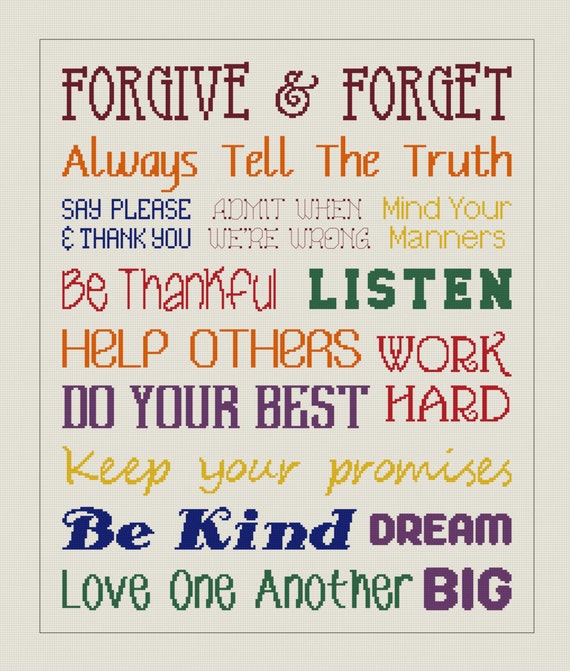
Family Rules Cross Stitch Pattern Counted Cross Stitch | Etsy2) Always follow through: If you don't follow through then your limits aren't consistent. This doesn't mean your child will love or accept these limits. It is okay for them to protest or show displeasure about the rule. We all feel that way sometimes about the rules. So we shouldn't be upset with them for expressing their feelings. Reasonable expression of our emotions is healthy. So acknowledge their emotion and move on with your day. The worst thing you could do is cave into their desires, go against the limits you set, and then be frustrated with your child by the situation. 


3) Acknowledge requests: Once you get into the routine of this your child might begin to make proactive requests (like a lot of them). This is an improvement. To encourage it get into the habit of acknowledging their requests and then giving yourself some actual time to think before deciding. This prevents you from parenting reactively. Sometimes you will be able to make it happen and sometimes you won't. When you can't make their request happen try to plan when you can do it in the future. This doesn't mean they won't be upset with your response, but you've got to stick to your guns. It is okay for your child to be upset or disappointed. Life won't fulfill their every wish and we can't either. We need our children to be flexible and able to adapt and overcome when things don't go their way.

    Above all stay calm and be consistent. Transitioning from an emotional or reactional parenting model won't happen overnight. But if everyone is on the same page you will all grow stronger together. And as your child learns that family rules are non-negotiable and that fit throwing won't change that you will deal with less argueing, whining, and complaining. So no more choosing our battles. Lets end the power struggle with our children for good and move forward together.

#RaiseAWarrior 


Thursday, April 30, 2020

Shelter In Place: A Family Experience


     As our shelter in place continues to stretch on we are all faced with new challenges to adapt and overcome. Some families passed through many of these hurdles in the beginning. Those first few days cooped up together were a battle as everyone struggled to adjust and develop new routines. Other families are just now hitting these walls. Originally these changes were viewed as a fun adventure. Everyone was excited for the opportunity and the change. Now that the novelty has worn off this new season of life looks like less of a grand adventure, and more like a bad dream we wish would end. No matter your family stage on this journey things are hard and we will have to continue to be flexible and patient with ourselves and each other.

     We can't allow ourselves to give into frustration or be overwhelmed by this current season. Because pandemic or not, this is still a formative time for our children. Yes, this is challenging. And yes, we are all pioneers in this brave new world. However, life goes on. We need to not only survive this season, but as families we must continue to thrive. I mean honestly we are living in an unparalleled stage that might one day be in future generations history books. When your children's great grand kids ask them what they remember of the COVID-19 pandemic of 2020 what will they say? What will stand out to them?
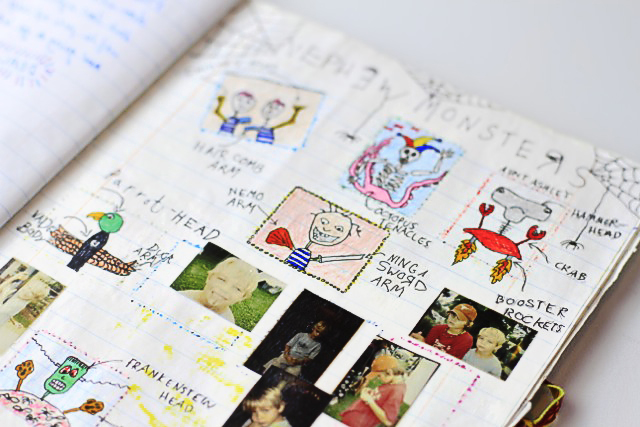
Creating a Family Journal     As weird as it sounds this outbreak has presented some great opportunities for families to bond and make special memories together. We, as parents, can make this time special. We can make this shelter in place a magical time that your child will fondly remember and love to share with posterity. If we choose to use this time to our advantage. Everyday life before the outbreak was busy, busy, busy. We constantly were telling ourselves and our children that 'we would love to do (BLANK) if only we had more time.' Now is our shot! So here are some ideas to continue making the most of this shelter in place something worth remembering...

DOCUMENT THE JOURNEY: 
     Our life is worth remembering. Having a visual or written version of our story gives us something joyful to look back on when things are hard or we are separated from the ones we love. So get the whole family involved. Consider making a movie or scrapbook about your family. Have everyone keep a journal or make a time capsule to bury and commemorate life before and during the pandemic. You can make this as practical or fun as you want to.

3 reasons why Superhooper will make hula hooping your family's ...
SHARE YOUR CHILDHOOD: 
     Being a kid is very different from how things were back in our day. Use this as an opportunity to share your favorite memories and teach your child the games and activities you enjoyed as a kid. Were you a pro hula hooper? Did you used to skateboard? Were you on a roller derby? Pull your equipment from the garage or snag it online and see if you've still got the moves.

CREATE NEW TRADITIONS: 
     Building weekly traditions is all about strengthening your family's routines and giving everyone happy things to look forward too (and depending on the tradition it can help you keep track of the days of the week during this strange new era). Now is the time to start having Taco Tuesday, Breakfast for Dinner, or Sundae Sunday. Now is the time to build weekly habits of being active together. Now is the time for walks after dinner, board game nights, or home movie theater days! Have some fun with it. Get everyone together and vote on what you want to do. Or write it down and randomly draw an idea (or two, or three) for the week.

Bathtub Rave Party | Emily Weaver Brown Photography | BlogMAKE THE ORDINARY, EXTRAORDINARY:
     There are certain things that have to be done. Bath time, work, school, exercise, bedtime, etc. Find ways to put a little extra magic in it. Maybe bath times include glow sticks now. All exercising is now a competition for who can has the best form or is the most flexible. Bedtime now involves a story under a makeshift blanket fort with a flashlight. Maybe you do school outside. Use this time we've been given to add magic to the ordinary.

    The bottom line is childhood is a magical experience, and shelter in place can be too. Making some special or uniquely out of the ordinary is what childhood memories are made of. So despite the fears many of us have and the anxiety, let's use this opportunity to sow a little joy in our homes. And as you allow the magic of new traditions to take root in your hearts you might just find sheltering in place isn't as bad as it was before.

#RaiseAWarrior 


Looking Beyond Ourselves When Things Are Hard


Children With An Older Brother Have Poorer Language Skills Than ... Raising children who are compassionate is no small feat in today's world. Especially with mainstream media pushing images of the selfish and sometimes indifferent lifestyles of pop culture stars. Filling YOUR wants, YOUR needs, and achieving YOUR dreams has become our youth's priority. And while those aren't inherently bad goals it does promote a certain egocentrism that we don't want taking root in our family and homes.

     Right now especially it would be very easy for us to focus on ourselves. The problems shelter in place has created for us. What we've lost during the quarantine. All the things we miss. Focus on our boredom or how unhappy this temporary situation makes us. We could even justify that this is a normal response to what we're going through. Normal or average isn't necessarily the standard we are aiming for. Yes, we've been blessed. Yes, we are used to a certain lifestyle and want it back ASAP. But to spend this time focusing on that, would be a waste of one of life's most precious gifts. Our time. If we remain unable to see outside of ourselves and our problems then this season will be very difficult. But if we can see what we truly have, in this moment, by recognizing all others do not have- it will allow us to realistically be more content, happy, and productive during this season. So here's a family centered action plan to start looking beyond yourself.

COURTESY AND RESPECT, AT ALL TIMES
     Children hear our words, but they truly follow our lead. Which means if we expect them to show compassion in how they treat others, then we have to do the same. At all times. So if you've been frustrated instead of lashing out, speak respectfully. Teach them to consider how their actions make another feel. Walk them through the process of why you said "They hurt your feelings" instead of immediately sending them to their room. All of our relationships can benefit from an extra dose of compassion so take the time to use daily occurrences as the springboard for these teaching moments.

St. Peter School on Twitter: "In October we practice the Virtue of ...
PRACTICE VIEWING THINGS FROM ANOTHER POINT OF VIEW
     Everyone has bad days. If someone is rude at the grocery store or while driving your children notice that and your response. Acknowledge that we shouldn't behave that way, but also try to put some perspective on it. Teach them to try to have some understanding for the wealth of things occurring in another's live that they don't see. Say "Wow, they really must have had a bad day to talk to others so rudely." Then apply this same practice within our home as well. If a sibling or someone in the family is having a hard time help your child take a moment and try to see things from their side of it. Being able to see things from another's point of view and be aware of how other's are feeling really sets the stage for some great patience, kindness, and compassion.
The Preschooler Remembers Veterans Day | www.wittylittlesecret.com

FIND WAYS TO HELP, NO MATTER HOW SMALL
     Although things are complicated right now with the pandemic if it is safe and you are able to help another do so. Sew masks as a family. Send letters to the brave essential personnel working hard to keep our city going. Regularly call extended family and try to send smiles to those stuck in Nursing home's and the hospital without visitors. Check in with friends. Show them that these little things can make a huge impact. Get the whole family involved in the Warrior compassion and gratitude challenges that our online training program is doing. Let's teach our children that anytime is the right time to engage in acts of service and show compassion for others.

     Looking beyond ourselves is a skill set that takes time to develop. It is going to take some truly conscious and concentrated effort to become a habit. But if you take the time to instill compassion and empathy in your family now, it is one of those umbrella character traits that blossoms into greater patience, understanding and kindness. And even if it is just you and your child spreading that love out into the world in a million seemingly little ways, that compassion has power. And it tends to spread. So let's see if we can spread compassion more quickly than the corona we are currently trying to flatten. We've got this!

#RaiseAWarrior 


Tuesday, April 28, 2020

Parenting Through Trying Times


How to Be a Strength-Based Parent for Kids with…

     Raise your hands up if parenting through a pandemic is hard! We hear ya Warrior parents. There is little to no access to childcare, school is out, and we can't rely on grandparents or babysitters like we used to. It's just us in the middle of it all. Through thick and thin. And it's not that we weren't doing all of this before. That we could manage. It's that now we have to do it all simultaneously. You're doing conference meetings while being home with your children. You're being the school teacher and working from home. Essentially this pandemic is forcing us to wear all our hats at once. Remember when we thought busy was the hardest part about being a parent? This is a whole other ball game. So how do we crush it all? And how do we avoid burnout while doing all the things at once?

This is a marathon, not a sprint:
      No matter what athletic venture you consider there is a basic formula for success. And that is stress + rest = growth. You don't have to be a seasoned parent to know that this is a hard calling. The fluctuating levels of stress is a given. But if we don't take moments to rest, if we are spread too thin, we cannot grow. It isn't rocket science that exhaustion effects our mood. We are less capable of kind and compassionate parenting when there is chance to recoup. And we do not know how long this shelter in place will last. So make time to rest. It will help you and your whole family get through this season.

Benny Christian on Twitter: "Life is a journey with problems to ...
Prioritize what's on your plate:
     Now is not the time for Instagram worthy parenting. Life is not picture perfect. And that is okay. This is a 24/7 experience and sometimes it won't be perfectly organized or clean. Maybe today you have a lot of work that has to get. Kids get a little more lax electronics day. The only rule currently is there are no rules! So do the best you can every single day. There is nothing that says you can't catch up on a missed school work day over the weekend. Tackle the most important things first. Those things with immediate and time sensitive deadlines first. A helpful thing to keep you on track is to every morning (or the night before) list the 3 things you have to get done for the day. Nothing else on your to do get's tackled until those are done unless it's an absolute emergency. Our plates are full. We've got to prioritize, break down, and conquer. You can do this!

Count the moments, not hours:
     Many of us are used to having some time to ourselves during the work day or after while the kids are in school, participating in sports or other after school activities. Now that is not the case. There aren't spare hours of solitude to look forward too. So we have to count the moments. If we focus on what we had it only breeds discontent. We have to find a way to positively reframe this new life we're living. So seek out and count the moments. Count the moments you get to yourself. Count the moments you aren't being badgered with questions. Count the moments you get to breathe. These are the moments you get to unwind, refill and just be. And they are so important. Don't let a never ending to do list steal those away from you. They should be a priority.

Find your tribe, love them hard. Art Print by hunterofwoods | Society6Keep connecting with others:
     Right now it is easy to feel isolated and alone in our struggles. Everything about life is in a weird sort of limbo. It is continuing, but we're all holding out for things to go back to normal ASAP so we aren't really trying to make this new season our new normal so it's an odd place to be. We have to connect. Have video chats with the friends, and co-workers you regularly used to lean on. You are all feeling isolated and even a few moments reconnecting with those relationships or checking in can go a long ways towards filling you. Have a virtual coffee date. Take a workout class together. Thanks to technology social distancing means we are never alone so use that to your advantage. Keep connecting with those adult peers. Give yourself opportunities to appropriately vent. Those few moments invested in yourself pays dividends out to the whole family.

    These are hard times, but you aren't facing them alone. Your Warrior's Way tribe is here, and still going strong. You may feel cut off from your extended family and friends, but we aren't truly. So chin up and don't forget you have to rest some to successfully grow through these stressors and come out stronger on the other side. Until then

#RaiseAWarrior 


Friday, April 24, 2020

Stop Yelling: Positive Parenting Tactics for Warrior Parents


Is Yelling at Kids Ever OK? - Learning Liftoff     We are doing it Warrior families! We're that much closer to a return to normal. Now we understand being cooped up all this time is wearing you down. Everyone has cabin fever. Emotions are high and patience is getting a little thin to say the least. And when our patience gets worn down we tend to yell a lot more. Yelling was a standard parenting tactic when we were younger, but that doesn't necessarily make it the best option. So this week we're tackling why yelling isn't necessarily the best (outside of emergencies of course) and how to make the switch to a more positive and productive method of discipline.


3 Reasons Why Yelling Isn't The Best
  1.  It is ultimately a band aid solution: Obedience was the focus of parenting when we were growing up. Which is why yelling worked so well. Yelling invokes a fear or startle response in a child. And so they respond with obedience to make it stop. However, this is a very temporary behavior fix. Yelling stops the act in progress. It doesn't teach why this behavior is undesirable or what to do instead. So ultimately no lesson is learned and the misbehavior will rear it's head at a later day.
  2. It damages your relationship: Losing our temper regularly can harm your relationship with your child. You want them to always be able to trust you. To know you will always have their back, love, and support them. Yelling doesn't instill that knowledge in a growing child, because us yelling is a negative in a very big way. When we are yelled at it is a put down. We will lose it from time to time. It happens. No one is perfect. But we have to make sure our child knows this was a momentary loss of temper. If they don't see it as you losing control they begin to believe you really view them in that negative light. And that can greatly impact your growing child's sense of self esteem, as well as how they view you and their relationship with you.
  3. It models poor communication: Those first connections with our family is what we most commonly model future relationships after. Think about your experiences through the years- whether you realized it at the time or not we all seek out relationships and connections that we are comfortable with. And that means we seek things we have experience with, whether it's the good or the bad. Do we want our children to seek out connections with people who consistently yell, scream at, and put them down? Or do we want more for our children? We have to model good communication and point out when we mess up so our children learn to recognize whats acceptable and whats not. And the stronger we can instill that understanding the easier it will be on them in the future when they start seeking out partners, and building a family of their own.
4 Things To Do Instead Of Yelling
    Love The Right Way :: YummyMummyClub.ca
  1. Know your triggers: Yelling doesn't just happen for no reason. There is no mystery if we take some time to self reflect. There are specific patterns or triggers that consistently send us over the edge. Maybe you only yell when you're extremely tired. Maybe you only yell when you have a headache or are hangry. Maybe sibling arguing pushes you over the edge because you hate your current relationship with your sibling. There is always a reason. You just have to identify your individual triggers. Then you can start fighting this bad habit and move to a more controlled and kinder method of parenting.
  2. Use reminders: Our kids have things they love and enjoy same as us. We've mentioned multiple times that gradual times help both us and our children transition mentally and emotionally to whats next. To demand they stop their game right now is a tad unrealistic. It isn't necessarily fair for us to yell when they don't comply. I mean we can, but it isn't the best way to handle this. Instead let them know it's 10 minutes until game shut off and dinner time. Then calmly do your part to honor that time frame. 
  3. Take a time out: If you find yourself triggered by your child's behavior or a situation take a moment to breathe and work through those emotions. You can do this by either removing yourself from the situation or by momentarily sending your child in a time out while you calm down. It is hard to teach when we're seeing red. Whether its you who needs the timeout or them, step away and breathe. Then you can come back calmer and address the true issue and the solution for next time.
  4. Yelling Debriefs: There are times when you will lose your temper. You will still intermittently yell and we can guarantee you will almost always feel bad afterwards. It is good to acknowledge that. Go to your child. Apologize. Reconnect. And take the time to teach. Explain what got you so bothered and how they can do their part to help prevent this situation from repeating itself. 
    Bottom line is there is a never ending learning curve to parenting. We don't have the cure all solution for what you're struggling with, but we are here to help. Struggling with something in particular? Let us know and our instructors can cover it during our weekly instructor zoom chats. We're here for you during the shelter in place. Our goals and mission are the same. We want to help you and your child be the best you can be. Even ole 'rona can't change that. We've got this!


#RaiseAWarrior 


Tuesday, April 21, 2020

When Your Child Lies


Image result for kid lying

     We want our children to grow up to be good, productive, happy members of society. And so we try to impart our wisdom and build within them a strong sense of character and a good moral compass. But no matter how hard we try, sooner or later all kids lie. And that's a little upsetting to us parents. It feels a bit like failure.

     The truth is all children will go through a lying phase. It is a normal stage of cognitive development to begin telling tall tales and exaggerating the truth. It is a sign of increased word skill and an active imagination. But as those tall tales turn into little white lies, and then on towards lying to avoid consequences, discomfort, or undesirable activities we start to get concerned. And we absolutely should Warrior parents. Because if we don't take a stand against lying now, they'll only get better at hiding the truth from us as they get older. We have a few short years of pivotal influence over the character of our growing child and we have to make the most of that. So here is an action plan to stop lying and help get your Little Warrior or keep them on track.

Check Yourself
     Tooth Fairy... Santa Clause... Easter Bunny... these are some little white lies meant to keep the magic of childhood alive longer. And many parents feel that's a good enough cause to stretch the truth a bit. But what of the other, not so innocent lies we tell our children. The ones we tell to save time? The empty threats we use to try and get them to behave? The count down which everyone knows is a bluff. The lies we tell to get out of and delay their tricky questions? What kind of example are we setting by regularly lying to our child? What damage is being done as they start to realize not to trust everything we say? How can we expect them to value honesty, when we don't hold ourselves to the same standards.

Give Them A Chance To Think
     Most of us have heard of the fight or flight mechanisms that are inherently ingrained to us. Studies are showing more and more that there are two more sub types of knee jerk reactions. There is a freeze, and then (especially in children) there is a fib response also. When a child feels cornered and like punishment is looming, sometimes the lies begin to spill forth. This is because they are impulsively blurting out an answer before taking the time to think, and respond appropriately. So teach your child to count think before they speak. If they do blurt out something untrue, stay calm. When we react angrily or with judgement they will continue to spew forth lies to diffuse the situation. Instead, stay calm. Take a breath yourself and ask them if they "would like a moment to think about their answer?" Usually this patient reproach is all it takes to get them back on track without further confrontation. Once they've mastered this step you can start teaching them what consequences naturally come from lying (i.e. lost friends, lost trust, etc) so they can begin to think on those possibilities while they pause before they speak.

Image result for kid lying memeDon't Play Detective
     This one is hard to do (or in this case, not do). Sometimes our parenting "spidey-sense" just starts to tingle and we smell a rat. But the truth is when we try and intermittently fail to detect when they are lying or not, we are giving our child a chance to perfect this skill set. And that isn't good for any of us in the long run. Since children often lie to avoid punishment sometimes it is better to simply state the obvious and move onto a small, but consistent discipline. So instead of getting into the drama of "I shoved him because he cut in line," and "I cut in line because he said she was my girlfriend." Try instead "We don't shove. Please take a five-minute timeout." 

Emphasize Good Relationships
     Many lies are told when a growing child or teen's sense of self worth or image is threatened. This can lead to complications between friends, social circles, and in our home. One of the best things my parents did growing up was emphasize the strength of our relationship. That no matter what I had done I couldn't change their love for me. My self worth, that image of our relationship was never threatened and could never be threatened. They were a safety net, no matter the hour. They didn't insist to know every aspect of my life, but they did sleep soundly knowing I would always call if I needed help.

     So take the time to build up a strong foundation of trust and honesty during their early years. Teach your child to examine why they were tempted to lie in the first place. Help them work through the consequences that come from lying. Always be honest yourself. Take the time to praise their honesty because you know it wasn't the easy thing to do. And continue to build up that moral compass to ensure they'll always have it to help during difficult times and when the stress of growing up gets a little too intense.

#RaiseAWarrior