Tuesday, March 30, 2021

Instructor Spotlight: Mr. Kory


Mr. Kory is AWESOME! 

He achieved his Junior Black Belt and continues our training in the teens program on our adult curriculum. Now he is sharing that knowledge and his awesome sense of humor with another generation of Little Warriors! 


Mr. Kory strives to teach our Little Warriors:
"To work hard and get it done."

The kiddos love Mr. Kory because:
      He is high energy and always down to work on more sparring techniques! His excitement carries over into them and gets them so pumped to train. Mr. Kory knows that the hard drills is where those big leaps of growth happen and he isn't afraid of a bit of work to see his goals happen He actually earned his Junior Black Belt in less time than expected due to his can do attitude. We love the example of hard work he sets for them. Mr. Kory is also one of those awesome big brother figures who genuinely loves to catch up on what's new and deepen his relationships with those around him.

A few of Mr. Kory's favorite things:
     Mr. Kory loves to train and is constantly learning and growing along with the Little Warriors. Because he's only been with us for a few years he still easily gets excited with new material and by seeing the kiddos succeed. He has a great sense of humor and is unapologetically himself. In fact he is the first one to make redhead jokes (which his fellow redheads loves) and even came to martial arts class dressed like a leprechaun for an epic Halloween class last year. Mr. Kory is a busy bee. He is usually thinking about food and complaining about his mountains of homework. In fact of if he were to have any super power in the world he wished for the ability to freeze time as it would allow him to get all the homework done and still have time for fun and mischief before dinner. 

A little bit more about Mr. Kory:
     Mr. Kory's life currently revolves around his family, school and martial arts. In his free time Mr. Kory loves Anime! His current favorite shows are K-on and Saiki K. The other instructors have recently just got him hooked on a new one called Cowboy Bebop who's martial arts style is actually based off of the Jeet Kune Do which we study in the children's martial arts classes. We love that his training bleeds into his other interests. Mr. Kory isn't quite sure what he wants to be when he grows up but he dreams of going to the plot of land he owns in Scotland that makes him officially "Lord Kory." No matter what this young man sets his heart to we know Mr. Kory can achieve it! He's demonstrated his dedication, self discipline, and hard work goal setting formula in his training and beyond.

Mr. Kory we love seeing your confidence grow in this new role! Your skills are helping future generations of Warriors achieve their goal of Junior Black Belt. We love that you are so willing to help and be a leader.

Here's bonus pictures of Mr. Kory testing for Junior Black Belt!


Mr. Kory's awesome family and support system


Mr. Kory is always smiling

#RaiseAWarrior 


Tuesday, March 23, 2021

Instructor Spotlight: Mr. Luka


Mr. Luka is AWESOME! 

He has been in our Little Warrior's program for over 9 years and is now using his Junior Black Belt Leadership skills to help show future Little Warrior's the Warrior's Way! 


Mr. Luka strives to teach our Little Warriors:
"That thinking outside the box is a useful skill."

The kiddos love Mr. Luka because:
      He is a bit of a nerd and has similar interests to them. Don't even get him started on Yu Gi oh or you'll get an education. He is also amazing during day camps because he loves to get on their level, play the games, and create epic k'nex weapons for them to battle with. He really is a big kid with an amazing heart who wants to help them have the most fun possible while still learning and crushing their goals.

A few of Mr. Luka's favorite things:
     In addition to a deep love Yu Gi Oh Mr. Luka loves other games and can often be found playing cards with his friends during his off time. He is also a budding artist, creator, and a bit of a tinkerer. His favorite show of all time is "How It's Made." This young man is always creating and learning. Mr. Luka used to astound us with his creations as Little Warrior and continues to do so today. His goal is to one day build his very own robot! No surprise to us since his favorite movie of all time, Pacific Rim, has epic robotic fighters in it. We expect Mr. Luka's robot to be just as amazing and can't wait to see how far this creative and hard working young man can go!

A little bit more about Mr. Luka:
     Mr. Luka Bearswitch as our staff endearingly calls him has been with us since he was just a little tyke (so small he couldn't say his last name correctly and he forever earned the nickname Bearswitch or Bear). He has always been light hearted, funny and kind and we love that he now gets to share that with future generations of Warrior's. He continues his training and is currently loving working on weaponry like stick and dagger in the teens class. And although he can be a bit of a prankster, Mr. Luka tries to emphasize the importance of empathy and honesty in all interactions and we think this is a true strength both on and off the mat. He looks up to his dad as his hero because "he's achieved a lot, and we're very similar." We know that no matter what Mr. Luka puts his heart to he will achieve because he is willing to do the work and have fun along the way.

Mr. Luka you bring such a fun energy to our classes! You are always ready to lend a helping hand and try something new. Your go for it attitude makes our team stronger. We can't wait to see how far you can go! 

Here's some Little Warrior pictures of Mr. Luka at his Junior Black Belt Test in 2015 just for fun

Serious Warriors Only


Working hard

Junior Black Belt Achieved!


#RaiseAWarrior 


Monday, March 1, 2021

Why The Right Mom & Dad Friends Matter

     We've always heard choose your friends wisely and any of us who remember high school can say how true that statement is; for the people we spent the most time with really have the power to impact our life in big ways. We know our closest friends can influence our attitudes and actions (as a parent and spouse), but their power truly goes beyond that. For many of us parents, being a part of my life also means you're a part of my child's life. So who are the adults and friends we welcome into our homes regularly? When choosing your friends do you seek them only for yourself or are you seeking good people who will help you raise up your child and influence them in the very best ways.

      Growing up my parent's closest friends were always like family. We went to stay at their houses regularly, called them our Aunts/Uncles and they never missed a birthday party or big milestone. And they came from all walks of life. Some were police officers, martial arts school owners, some were stay at home parents, some worked at the movie theater, some graduated college and some had not. Their value, wasn't determined by their job title or education status, but that they were men and women who loved us, looked out for us, worked hard and were always kind to others.

     So who are the adults and friends in your life? Do these bonds only benefit you or do they also extend to enriching your child's life? No matter how you choose to view your friendships or include them in your families life here are some things your choice in friends teaches your child about good friends.

It Teaches Them To Seek Out Good Character

       The quality of an individual and the values and ideals they embody will affect your child much more than their successfulness or status within society. So whether your children are involved in your adult friend's lives or just hear you speak of them make sure to emphasize what really matters. Point out and praise their strengths of character in front of your child. Your child (especially during the early years) wants to be like you and soaks that stuff right up. So teach them to seek friends of exemplary character who push them to be better and do the right thing.

It Teaches Them To Seek Out Dependability

      Seek out friends who stand by you and aren't only there out of convenience or for fun. We know life is full of unexpected curveballs so teach your child to seek out friends who are there through thick and thin no matter what. The kind of people you can turn to when life gets hard. And who better to exemplify this than the friend within our spouse or significant other? However, dependability is a two way street. Let them see you prioritize your relationships and consistently follow through with your plans. Dependability is one of those priceless traits in any relationship so teach your child to be dependable and seek it out in others.

It Teaches Them To Seek Wise Council

     Our friends and peers can have a strong impact on our attitudes and the important decisions we make. It's important to gather around you a group of people you trust, who share your values and see life through a similar lens as you do. It's also important to have friends who won't pull their punches and are willing to correct and steer you back to the right path if it's required. The world will bombard us with many voices- the voices of ambition, power, wealth, greed, and selfishness. We need to surround ourselves with people who consistently speak the truth. So let your child see you show some emotion and let them see you be open with yourself and your relationships concerning present obstacles. Let them see you weigh those hard decisions. Seeing this process and a bit of vulnerability will teach them to also seek good council and weigh the pros and cons of any big decision.

     So there you have it. Your friends are yours, it's true, but they also can have a bigger impact on your growing Little Warrior than you would first suspect. So seek out friends and relationships who lift you up and also teach your child to seek the very best. Happy parenting! Keep being awesome Warrior parents!

#RaiseAWarrior 


Thursday, February 18, 2021

Instructor Spotlight: Miss Camryn


Miss Camryn is AWESOME! 

She was in our Little Warrior's program growing up and received her Junior Black Belt in our kids program. She's practically grown up with us and we're grateful to have her on our team raising future generations of Warriors!


Miss Camryn strives to teach our Little Warriors:
"To always work hard and never forget they can become a better Warrior." She has an amazing can do attitude that has helped her overcome many obstacles during her training and in her personal life.

The kiddos love Miss Camryn because:
  1. She always has a sweet smile and hello for them
  2. She genuinely is happy to see everyone
  3. She is a good friend to any in need
  4. She knows the value of hard work and can help motivate them and make it fun even when the material block is difficult
A few of Miss Camryn's favorite things:
      For such a tiny thing Miss Camryn loves to eat! Her favorite food is any type of pasta which is funny since Miss Camryn's nickname growing up with us was "cameroni macaroni." She was not a fan in the beginning but Miss Macaroni has definitely grown to embrace all of her quirks. In addition to food Miss Camryn has a big love for the martial arts and showing up the boys technique-wise, taking unique photos for her Instagram, rolling her eyes at Miss Alana's corny dad jokes, playing board or card games, and for anything Taylor Swift. Whenever a new album comes out you will definitely hear it first from her. 

A little bit more about Miss Camryn:
      Miss Camryn's hero is her grandma. No matter what hardships life throws at her she always is supporting to everyone and focuses on finding the lesson at the center of every trial. Miss Camryn strives to be like her and we love that about her very much. We know that no matter what Miss Camryn sets her mind to she will achieve it and overcome because she isn't afraid to work hard and fight for what matters. So although Geometry might currently be a trial we know she'll find the solution (pun intended) and crush it in the end.

Miss Camryn we are so excited to see you step into this leadership role while continue to crush your own goals. We are looking forward to seeing how far you can go!


Some throwback baby Warrior pics of Miss Macaroni testing for her Junior Black Belt in 2016 just for fun...


#RaiseAWarrior 


Tuesday, February 9, 2021

Instructor Spotlight: Mr. Alex


Mr. Alex is AWESOME! 

He used to be in our Little Warrior's program and after working hard to help our kiddos have some awesome summers he decided to hang out with us all year long during this whirlwind of a transition!


Mr. Alex strives to teach our Little Warriors:
"That compassion is a wonderful thing to have even on the hardest of days."

The kiddos love Mr. Alex because:
He is a bit of a nerd and knows a lot about a vast array of subjects
He always encourages them to be smart and work hard in school
He has the corniest jokes and is very "punny"
The After School kids get to hang out with him and color or construct paper weapons once a week

A few of Mr. Alex's favorite things:
     Mr. Alex likes to keep busy. He enjoys hanging out with his friends and is always down to talk. He also has a varied array of hobbies including drawing, video games, vibing to music, and playing the trombone.


A little bit more about Mr. Alex:
     Mr. Alex came to work for us full time after a tumultuous summer camp in 2020. He is very chill individual. We love that out of all the super powers he wishes for the ability to stop or slow time so he can enjoy the things and people in his life more. Mr. Alex is a big proponent of kindness and perseverance. He has worked with children for several years in tutoring and mentoring in a leadership program at Junior Highs for credit towards his college courses. When asked who his hero is, Mr. Alex chose his dad and said "through all of the hard times he has shown me I have to think about the problem at hand and then act. That way I can find the best solution to get through." We love this mentality Mr. Alex brings to our children's program and how he helps builds up our kiddos.

Mr. Alex you bring so much energy and experience to our program! Thank you for being you and helping give back by raising the next generation of Little Warriors.


#RaiseAWarrior 


Friday, December 18, 2020

What Do We Want Our Kids To Be When They Grow Up?


      As we near the close of 2020 we can't help but look forward to a brighter future in 2021 after the tumultuous misadventure this year has been. But a looming new year isn't the only thing brimming with potential. Every time we look at our child this is what we should see. We have such high hopes for our children and the sky truly is the limit. As they grow, we ask them intermittently what they want to be when they grow up to watch those dreams mature as they do. And as they move beyond the goals of "super hero" or "princess" and find more practical passions and interests we can't help but ask ourselves what do we hope for our child? If you could pick one thing for them to be when they grow up what would it be? Many of us would think happy, fulfilled, or successful. All of which are noble wishes of course, but what is the true goal?

     I feel a more accurate wish for our children is that they become capable. Amongst a world of many options, opportunities and distractions I want our little ones to grow up capable. Capable of caring for themselves and their loved ones. Capable of standing up for the right thing. Capable of being a good friend. Capable of making their own decisions. Capable of succeeding, but also picking themselves back up when life gets hard. Capable of the mundane odds and ends of life like changing a tire or maintaining a home. I say this looking at a world full of young adults who are a little less than capable and more than a little fragile when compared to other generations. So here are a list of lessons to help make your child a little more capable when they grow up.

Capable of hard work

      Thomas Edison famously stated, "Opportunity is missed by most people because it is dressed in overalls and looks like work." And while overalls are no longer the requirement of our day to day life, it is easy to see that it is hard to fully reach our potential without the ability to truly buckle down and work hard. And the beauty of hard work is you can start instilling it in your child no matter where you are. For example: stop hiring out hard jobs. You don't need someone special to sand, paint, or upkeep the lawn. Those sweaty tasks were ours for as long as I can remember. Treat their school as a work ethics training ground and allow them to suffer the consequences when they don't follow through. Being a hard worker is a character trait that can push you forward, so teach them young.


Capable of resilience

     No matter our age, life can be hard. And while our initial response may be to step in and shield our child from adversity and smooth their way, it is important to remember that hardship is an excellent teacher. There are life lessons in failure that cannot be learned any other way, and you don't get a diamond without a little pressure so don't be afraid to let life 'squeeze' your kiddo a little bit and show them just how strong they are capable of becoming. 

Capable of basic life skills

     There are some basic skills not covered in home economics that should be learned before our children leave the nest. Teach them the basic budgeting and finance. Teach them to care for and maintain their investments (be it a car, home or relationship). Teach them to unclog a toilet, change a lightbulb, and switch out a flat tire. Teach them to use basic tools. Teach them the basics of cooking, shopping, meal prepping, etc. Life as an adult gets busy quick so why not give them an advantage while we can.

Capable of being a good friend

     Unfortunately, we won't always be around to look after our child's emotional and mental wellbeing. So teach them to seek out good relationships and how to be a good friend in return. Our digital world, has distorted the worth and definition of friends. So teach your child the difference. Teach them to seek out loyal friends, who keep them accountable, encourages them, celebrates and mourns with them as needed. Friendships are pivotal in shaping your child so save you both some heartache and teach them young. 


Capable of protecting their family

      There are many aspects to this one and it kind of depends on who you and your family are. Maybe you're a family that trains together in self-defense for the worst case scenario. Maybe you're a health focused family fighting against a family history of disease. Maybe your protection of choice is fighting for financial security. Maybe you fight to protect your family and your relationships by setting healthy boundaries and working to have a good/work life balance. There are many ways of protecting our family and you can model and teach these best while your kiddos are young. Stressing the importance of family and those traditions now will also help during the years when they start to stretch their wings and leave the nest.

      We know that childhood is a busy and magical time. It is so easy to get caught up in the short term goals of day to day life. Just surviving this phase. Getting through this school year. Learning to do this thing. However, there truly is benefit in parenting with a more long term focus. Think about the adult you hope your child will become and work backwards from there. Ask yourself "What can I do today to foster that goal?" Because what makes your child happy at age 5, 10, or 15 is quite different from what makes them happy at 25, 35, and beyond. There are a million ways to love a child, but in our quest to make them happy, let us be mindful that long term goals of raising a child with strong character is much more pivotal than any short term goals involving a report card, trophy, game or recital will ever be.

#RaiseAWarrior 


Monday, December 14, 2020

Empty Threats: A Guide For Warrior Parents

     Disciplining a child can feel like a lesson in escalation. I mean day in and day out it goes like this... child breaks rule, we punish child. Child breaks same rule again, we punish harder. Child breaks same rule for the up-teenth time and the whole system starts to break. We're frustrated, we punish hard, and we threaten far worse to come in the future if they dare try us again. 

  • "You'll be grounded for a month" (hmmm.... immediately starts thinking probably not as it limits the whole families ability to do things and is super inconvenient). 
  • "I'll throw away your game system" (nope, won't really do that one either. Our child being able to self entertain allows us to get a lot of things done without having to worry too much about them). 
  • "I will turn this car around" (well... actually... no I won't. This outing has been planned for awhile and invested in. We all need a break from routine and a single moment of bad behavior isn't going to change that). 
  • "Calm down and finish your dinner or you'll have no dessert" (... come to think of it... we might do that if it was just us, but we are out at dinner with friends and we won't all eat dessert without them. That is going too far). 
     So will we really push the punishment to such extremes? Most of the time the second an empty threat leaves our mouth we already begin mentally backtracking. And though we think it harmless our lack of follow through has far reaching consequences. Now don't get us wrong. Every parent slips up and uses an empty threat from time to time. It's just a knee jerk reaction when we are under pressure, stressed, embarrassed, and desperate for anything to work. And in the beginning our empty threats do work. There is some initial behavior change. But as we continue to show a complete lack of follow through  we realize that while empty threats might be a common parenting tool that doesn't necessarily mean it's a good one. So as we enter the crazy holiday season we want to touch base on what empty threats teach our child and what to do instead.

Empty Threats Teach Our Child To Mistrust
     Kids are extremely smart and they are constantly soaking up lessens through even the most mundane of our interactions. A young child initially knows only trust. They mean and do what they say and expect everyone else to do the same. But as life goes on they begin to learn a different sort of lesson. They start to pick up that things don't always go as stated. An empty threat or a broken promise from us teaches our child that this is now acceptable behavior. Now that the things we say mean less there is a sense of mistrust in the relationship. And this changes the stakes and leads us to problem number two.


Empty Threats Teach Our Child To Hide Their Behavior
     Consequences are supposed to help socialize our child and help them internalize good morals. This happens through rules done consistently, reasonable punishments and when we take the time to explain the reasons behind the rules at a level they can understand. But when our punishments are emotional, and used to intimidate rather than inform it undermines our child's sense of rules and consequences. Instead of helping them internalize lessons and morals your vastly varied approach to punishments is teaching them that rules are dependent upon the context of the situation. This draws too much attention to the punishment. It leads to rationalizing their way out of trouble or even worse being sneaky and lying to avoid punishment. And if they do comply it is for the entirely wrong reasons and means they aren't likely to comply when they're away from you. Which is a problem since no one offers them their first beer, cigarette, or a chance to bully someone in front of you. 

Consistent Discipline Teaches Our Child To Trust Us
     When we consistently set rules, explain the rationale behind them and set reasonable consequences our child knows they can rely on us and the predictability of our morals no matter what. It helps them trust our judgement better and feel more comfortable coming to us with their mistakes, problems, or those moral gray areas of uncertainty. Investing in cultivating this healthy attachment now does wonders during the teenage years. 

Consistent Discipline Teaches Our Child Strong Morals
     This happens when our consequences are logical. A consequence should be related to the offense and setup to repair the harm of their actions. This helps children learn how to view their behavior with an empathetic lens. Now before acting they pause to ask themselves "How will this action affect themselves and others?" For example a sibling who fought and wasn't willing to share/play with their sibling kindly shouldn't be isolated as a punishment. They couldn't solve their problems and that is what they wanted, for their sibling to ultimately go away and let them play alone. Instead making them repair that damage and work together with the sibling is a much more suitable punishment. It isn't forever, but give them a set amount of time that way they can spend that focused time repairing the harm their choices caused.


      So stop threatening misbehaving children without actually following through. Especially during the holidays. I know we are all stressed and busy, but don't give in to the siren's call of empty promises and hollow threats during the season. Take the focus off the number of presents Santa is going to bring. That is a band aid solution and not effective. Stick with Santa is watching and very proud of your kindness, or your patience. This kind of praise spotlights good behavior or character traits and encourages more of it. Because in the end our kids ultimately want to make us proud. So take that elf on the shelf or the myth of Santa and use it for good. Don't threaten or promise. Use them as a means to encourage more good behavior. And as always take time to breathe and think. We know that parenting is one of those delicate balancing acts between fostering a caring and loving relationship while being firm and teaching strong moral character. But it is one of those things that is always worth your time and incredibly priceless in the long run. You've got this Warrior parents. And we've got your back. 


#RaiseAWarrior 


Wednesday, November 18, 2020

Time And The Parenting Paradox

Put your phones away during family time with kids | Parenting News,The  Indian Express

     Today's world is very acquisition based. What do I get out of doing "X"? But what if in fact we don't need more? Sure, a nicer car, more pay, more savings would all be nice. But to get more we usually have to give more. And at this point most of us are spread pretty thin. So what if instead we choose less? What if we chose to be choosier with the things we took on so we could be more productive with our time and carve out more space for our family? Still undecided? Well let us put it this way...

     Parenting is challenging. Each stage has it's own unique set of hurdles and so we constantly tell ourselves that this part of parenting may be tough, but it's going to get easier. And so we constantly look forward to the next goal post or level of independence our child will develop. We use this thought to motivate us during the hard times. But the parenting paradox is that all that we wish for will come true and then some. For our children are only young once. There will be a last time that they have an accident, throw a fit in public, and are unable to strap themselves into the car. It's a magnificent thing, but also terrifying. Because if one day those will end so too will the times when your child holds your hand, or falls asleep in your arms. One day you will wake up and they will want to hang out with their friends more than you. All along we push ourselves, saying this job will get easier and that one day our children won't need us as much. But too often, when it comes true, we realize that we needed that time with them as much as they need time with us. So instead of solely focusing on the freedoms the next developmental stage of parenting brings us, let's ask ourselves "If I continue with my current routine what will I regret the most?" Because our child spells love the same way we do: in quality time. So this week we offer some simple steps to make the most of your time together (no matter how brief).

Put The Phone Away
     Our phone use has become habitual. It isn't even a conscious thing anymore to pull it out and absentmindedly scroll. It's soothing. But our children are very observant. Checking our phone during our quality time with them sends a message that this little device and the things on it are more important to us than they are. And that is definitely not the message we want to send our child. So prioritize your family over electronics and other devices. Have a no device rules on family outings. Invest in a real camera if you don't think you can help using your phone beyond a memory maker. Use car rides as a chance to connect and draw closer, rather then delve into our own little world. Every single one of our moments together can be precious if we make it so.

No Cell Zone | My Meditation Challenge

Talk To Them
     Much of what we do is done on autopilot and this includes connecting with our family. Our conversations should have meaning and depth. We shouldn't settle for the superficial. We should be checking in on each other, learning about one another, and helping push each other towards our dreams. We can't do this by asking how their day was and settling for "It was fine." Get creative with your conversation starters. Ask what the funniest part of their day was? Ask what made them smile? Ask if they saw or did a random act of kindness? And model this kind of personal conversation in the other relationships you're a part of. Our children learn much about connection and openness by our interactions with our significant others so don't settle for simply superficial with them either.

Choose To Play
     Play is such a magical part of childhood. And with the right nurturing it can mature into an adventurous and fun loving spirit that you can continue to share with your family later on. So why is it we pass up these moments of loving connection? At the park, during sporting events, at a play date the adults can be found sitting around glued to a screen or chatting with other parents. And while it's important to foster parent to parent relationships, it isn't of greater value than investing time with your family. So shake off the tiredness. Even if it's just for 10-20 minutes. Playing with your family may take some energy out of you, but it always puts a smile on your face and is a small price to pay for an experience of connection. So play with your family. Be silly with your family. Those flights of fantasy and creativity show a peek into their personality and might even creak open old parts of yours.

      So there you have it- a quick little intro to the parenting paradox. Time is ticking away and it is okay to be selfish about it. Our children naturally gravitate more and more towards their peers as they grow so make the most of every second. Get your life together enough to start taking advantage of these moments. Stop wishing away this parenting journey. We may intermittently want an easier life, but easier isn't always better. There are adventures out there and memories to be made. So make every second count and they just might want to keep adventuring with you. You've got this Warrior parents!

The future is unknown, the present is a gift and the past is history. If  you keep dwelling on the past and th… | Master oogway, Kung fu panda quotes,  Kung fu

#RaiseAWarrior 


Monday, October 19, 2020

Teaching Your Warrior About Bad Words

The Negative Effects of Mouth-Breathing - Canton Park Dental

     Our children are like sponges. And in today's world it is far too easy to soak up some bad habits. One of those habits is swearing. And in today's digitized culture swearing has unfortunately become a normal part of childhood. The thing is our children are exposed to so many foul words and vulgar content (at a younger age than every before) because it is normalized and readily accessible. It is in their video games, common at school, among friends, on YouTube and other streaming platforms and social services, and prevalent in the shows they watch. At first hearing these words from your innocent child's mouth may come as a shock or end up quite comical. But as your child grows and stretches their wings and meets new people their vocabulary continues to expand. And it can become harder and harder to eliminate unsavory words from your household once it has become the norm.

     In the beginning younger children repeat something they've heard just to try it out. They are listening and learning and will repeat words without thought or understanding. Our response during this time matters. If we giggle, laugh, record, or even if we get upset we are teaching them that this word causes lots of emotions in adults. And how could it not? When your first grader uses the F word do you giggle at the absurdity or are you appalled. Once they realize a word has that kind of power over us, these words become very attractive, as a means to get attention. And if we denote it as taboo in our household, they get a big thrill out of using it in secret.

    As a child matures their use of bad words change. Sometimes they use it to test boundaries and our response. Other times they use it for the lack of an ability to accurately describe what is going on, as a sort of filler word. They still don't always understand the meaning behind the word, but they are starting to use it in a more purposeful manner. So no matter the age of your Little Warrior here are some good steps to start addressing it and help you kick foul language to the curb.

Stay Calm
      Children are curious. They might ask what a word means to understand or just be trying it out. So stay calm, especially for the first encounter of the word. It may be tempting to yell or laugh, but we don't want to continue to reinforce the idea that using this language is appealing. You get to decide if how much to explain. Simply acknowledging that it is an "unkind word some people use that isn't appropriate for children" is low key and straightforward enough that it educates while making the word less appealing to a child who was looking forward to a big reaction. Further discussions, depending on your child's age, can be on how our words affect others, acceptable ways to treat others, and how we want them to view and respond to us. All of this should be done calmly for a first offense. We are educating at this point and it isn't an emotional response.

Lay Out Your Family Standards
     It isn't fair to punish if the rules were not clearly defined. So when unkind or foul language begins to pop up in your household make a plan to address it. Each families rules are unique. We have tons of kids tattle on their playmates for using the "S" word for example which simply was "stupid" or "shut up." While these words are unkind and unacceptable in your home and for use among friends, it is important your child understands they are not swear words, but rather ugly or rude words. Words that other families may have normalized. So find where you all stand on the issue. Why does stupid or shut up make you cringe? Or are those words fine and you're only concerned about the more PG-13 expletives? It takes us clearly define our family standards and setting a consistent consequence to beat these kinds of words. And it takes a little bit of eloquence to not call out or belittle other families methods in the process. Something as simple as a swear jar or an extra chore for the offender is punishment enough for the casual user. You may have to get more creative if this is a more long lasting problem in your household.

No Bad Words by No Bad Words on SoundCloud - Hear the world's sounds

Consider Acceptable Replacement Words (If Any)
     Growing up my mom had an exorbitant amount of creative filler cuss words. From "biscuit eaters" to "shoot a bug" her odd exclamations never cease to amaze me. And although when I was younger I often wish she would cuss like a normal parent and got embarrassed by her word salad under duress I also have to appreciate the creativity she had for not sticking with the tradition "son of a gun". So if filler words are your thing or if your child is needing a replacement word for their new favorite naughty words brain storm together. Just be sure to let your child know that everyone's household is different an they will encounter different rules. "Stupid" or "dumb" may be an acceptable word for your household, but should be used with caution outside of the home out of respect for others.

Alternatives to Attention Seeking
     Foul language gets a rise out of people. Whether that attention is negative (from adults) or positive (from their peers) is of little difference to an attention seeking child. All they want to be is noticed and their new vocabulary definitely ensures that. So if you believe your child's use of explicit language is to gain attention you will have to address the underlying reasons to really see a change in vocab. If the child is feeling disconnected from you and is acting out accordingly to catch your notice then begin taking steps to fix that. And if your child is merely using foul language to fit in or get a laugh from their peers it is easy to equip your child with other, more effective and appropriate methods of gaining attention.
Swearing and giving gaalis? Find out how to handle kids who swear.

Positive Ways of Naming and Handling Emotions
     Most young adults use explicit language because they feel unable to adequately describe or convey what they are feeling. Most of this is purely frustration or anger, but sometimes other emotions can come into play. Learning how to recognize and handle our emotions is an invaluable skill set, no matter the age. So rather than accepting your child saying "This is stupid" as they crumple up their challenging homework assignment, guide them through naming what they are feeling and give them more positive and effective ways to deal with that emotion. Praise them when they start to do this on their own and as always make sure you are modeling proper naming and expression of your emotions as well.

     Above all it's important to understand that while the world is quick to share foul language with our growing child, the rest is up to us. When we only shut down bad words, our child never gets a chance to understand what was inappropriate or how they can better articulate their feelings. And for our kids to really have a solid understanding of respectful language, they have to know a little about the bad. So take the time to have these proactive and conscious discussions with your child. It's one of those things you won't regret. You've got this Warrior parents!

#RaiseAWarrior 


Thursday, October 1, 2020

How To Get What You Want Without Nagging

Communication in Relationships: 10 Tips for Charlie Brown's Teacher :

     As parents we know there are many important things we need to teach our children during this time. And we tend to try to really drive home the point that this stuff really matters through repetition. But for some reason no matter how much we harp, nothing we say seems to get through to them. How do we teach our children to be good successful people if our advice just goes in one ear and out the other? What good are we achieving? Why does this method of teaching lead to such push back?

     The problem lies in nagging. No one sets out to be a nag. And most of us hate to be nagged ourselves. However, it is an easy parenting cycle to fall into. Because naturally in trying to really drive home our point we repeat ourselves over and over again. We are trying to help, but as we say the same thing again and again, our words start to lose their meaning. They lose their urgency because the listener knows you'll bring it up again later. And as we start to get frustrated by their lack of response, our initially kind and patient admonishments become a personal sore spot which we have no patience, no time, or understanding for. So today we're tackling why nagging doesn't work and how to get what you want in a more positive manner.
     
Why We Nag
     The first step towards fixing any problem is recognizing it. And nagging is no different. Nagging is surprisingly more about us than our kids. It can happen because we feel powerless and chaotic in certain aspects of our lives and so we seek control of something, even if it's just the micro behaviors of our family. Sometimes nagging occurs because we feel anxious for the competitive world in which our children will have to work in and so we constantly push them to the top and towards our perception of excellence. Sometimes we nag because we are so busy and stressed out that we are truly parenting on the fly. We begin barking instructions and sometimes forget amidst it all that they are children who need our patience and guidance.  And other times our nagging comes purely from unrealistic expectations or subconscious learned behaviors from our own parents. Regardless of the cause if your kids aren't listening to you regularly and you feel the need to nag it might be time to look within.

Why Nagging Doesn't Work
     No matter our good intentions, it is important for us to understand why our nagging is ineffective. Our nagging conveys many negative messages to our family. Nagging teaches that we don't trust each other to just do the right thing and that we feel the need to micro manage them with a double and triple check because they are incompetent or incapable. It is a controlling parenting tactic that can lead to resentment or more confrontation and rebellion (especially with an older child). It is a form of negative reinforcement, which science has proved time and time again to be an inferior model of teaching. Nagging is a constant form of finding fault and it can wear a child's self worth down. And at the end of the day it's just words. Our children learn to dodge these words and tune them out because experience has told them eventually you'll let it drop or finally do it yourself.

Face You Make Robert Downey Jr Meme - Imgflip

A Better Way Of Getting What You Want
     So how do we get out of this cycle? Because once we fall into a routine of nagging there is always something else to nag about. And for those of us doing the nagging, it is exhausting to stay on top of everything for every one all the time. So where does it end? Luckily for us tired parents there is a better way for you to get what you want consistently from your family. It just takes a little bit of retraining for them and you. So here the Warrior Parent's action plan to making the change
  1. Find Your Triggers: As parents, each of us have individual things we feel compelled to fix in our child. There are triggers that just matter more to us. For example some of you can avoid nagging over sloppiness much easier than you can homework hurdles. Our child's education just carries more weight. We feel compelled to do something about it so they can be successful. Identifying your triggers for nagging and understanding why you feel compelled to do so goes a long way towards ending this parenting cycle.We know that everyone needs a push from time to time and the last thing we want is to not push our children when it's needed; but it is also important to realize that when parenting from a position of insecurity we rarely choose the best path.

  2. Listen to find the root problem: Nagging is the opposite of listening. And if there are reasons for our nagging there are also most likely reasons for our child's inaction. Yes it is very important to you that your child has a love of learning and get's their homework done. Maybe they are dragging their feet because they don't want to be the smart kid and mocked by the peers. Or maybe it's as simple as they want to finish this episode or level first. When we take the time to listen to our child we are putting ourselves on the same side rather than on opposite ends of a battle field. 

  3. Plan B: Once you've examined yours and your child's reasons for action or inaction it's time for plan B. There are several ways to do this. (1) You can let your child suggest a plan, (2) you can come up with a plan together, or (3) you can set forth the natural consequence and step back and let them decide. So if we continue using the homework hurdle as an example. Instead of nagging your child to get their work done you can (1) ask them to tell you their plan so you don't have to worry anymore. This shows your child concern for their education but also confidence in their ability to make it happen and problem solve. (2) If your child isn't certain how to succeed you can come up with a plan together. Maybe it is distraction holding them back instead of fear or distaste. In which case setting a timer and checking in on them routinely might be beneficial. (3) And if all else fails don't be afraid to lay out the negatives like it is. No they don't actually have to read that book or write that report right now. They don't have to pass their classes. However, there are natural consequences to their actions that you cannot and will not protect them from. And if they choose them you will let them fail a grade, be kicked out of sports/extracurricular activities, and do summer school.

  4. Empower Your Child With The Right Tools: We can't expect our children to succeed without the right tools to strengthen them. And we do feel the need to nag when we don't believe our child is able to succeed. So if your child is easily distracted during homework time or wants to game first get them a timer or alarm. They can set it for an agreed upon period of time to reorient themselves or let them know it is time to get busy. If your child is misplacing assignments get them things to help organize better or help them setup a homework station so all their things are right where it's needed. If your child is forgetting assignments or missing deadlines try a planner, electronic reminders or a wall calendar. An empowered child is one with the right tools. And if we've set them up for success there isn't really a need for our nagging.

    Kids at Home: Homeschooling Resources | Marin County Free Library

  5. Positive Reinforcement: Building new habits take time. It will be quite a transition for you to stop nagging and for your child to take a more active role in getting tasks done. So praise-praise-praise. And if you must correct use the model praise-correct-praise. If your child turns off their game when the timer goes off or doesn't have to scramble to find their assignments before they go to school praise their execution of their end of the bargain. Praise their preparedness, their great attitude, their organization, their work-play balance. Be creative with your praises so they remain sincere. But if your child didn't quite hold up to their end of the bargain, don't nag. Use the positive reinforcement technique of praise-correct-praise. Praise them for starting their homework. Correct them by saying "In the future you would like them to use the timer like they agreed upon to avoid distraction." And praise them to end on a positive note by saying "You're proud that they're getting back on track so quickly."
     The bottom line is nagging is an exhausting and unsuccessful parenting tact. We know that by making these slight course corrections with your family you will be more successful and have more time for what truly matters- raising strong children with good character while making awesome memories together. You've got this!
#RaiseAWarrior 


Monday, September 21, 2020

Healthy Relationships: A Foundation For Our Child's Future


     We know that relationships are one of those things that can propel you forward in life or hold you back. And we all want what's best for our children. We don't want to watch them hurt or be taken advantage of. We want them to grow up and find that special someone, to share in the joy and the happiness that a healthy relationship can bring. And we play a big role in that! No we don't ultimately get to choose that partner for them, but we can model what healthy relationships look like. But fear not! If your marriage, love life, or romantic relationships are far from perfect there are still lots of ways to teach your child about healthy relationships. Modeling isn't the only method of learning. So buckle up because this week we're tackling some of the things that help you have a strong foundation in your relationships (and who knows you might also learn a thing or two along the way).

Be a family who turns towards
      In all of our relationships there are moments where the other person makes a small bid for our attention so to speak. This doesn't just happen among romantic relationships, but also friendships, in the workplace, and between family members. These bids for attention can be as simple as them trying to engage you in a conversation by telling you something they learned that day. When someone you care about makes a bid for your attention you can 1) Turn towards them by showing interest and giving them your attention, you can 2) Postpone their bid by letting them know you're in the middle of something that you need to finish at the moment but that you would love to hear all about it after BLANK (notice this is still a positive response) or you can 3) Turn away from them by ignoring them or 4) Turn against them by demeaning them, being sarcastic, or downright nasty. Happy couples turn towards their partner at least 80% of the time. So teach your family to be a group who turns towards each other as best you can. Yes sometimes we parents will have to postpone their bid for attention but we can still do it with kindness and love. And these kind of interactions bring us closer together in a positive manner.

Consequences of Favoritism with Your Children | Reader's Digest

Create a culture of appreciation
     It is far too easy to take things for granted. Especially in our relationships. When we become accustomed to certain things and begin to expect them without us doing anything in return we are setting our relationship up for failure. So say the things you value and appreciate about each other out loud. No matter how small. Use those small moments, to catch the things that are going well and are right. Let them know that "dinner was great" or that you "know you can always count on them to pay the bills on time" When we make an effort to say this to our partners and our children we are teaching them that "This is what we do as a family. We love each other. And we always let another know what we appreciate about them." Even when our lives and relationships are't perfect, when we have an attitude of seeking out the little things we appreciate our partner more and consistently remember how amazing, sweet and thoughtful they really are.

Emphasize the basics of conflict resolution
     Lots of parents avoid confrontation, conflicts, and apologies in front of their children. This leads to arguments being seen as a sort of taboo or bad thing. Now if your style of conflict resolution is a knock down screaming and name calling match please definitely keep that to yourselves (you aren't fooling anyone though, not even the little ones). Conflict and arguments are natural parts of relationships and they can be healthy if handled with respect, love and kindness. So teach your children the basics of conflict resolution. Let them see you work things out with your partner. It is okay to disagree so long as respect and courtesy is maintained while some kind of middle ground or understanding is reached. And then move on. Don't name call, or bring up past things. That isn't the kind of relationship we want to model for our children. Let them hear you discuss things, let them hear you treat each other with respect and patience even while frustrated or emotional. And above all let them see you own up and make things right when you are wrong. These are the basics of conflict resolution and a lot more couples would be happier if they could master this skill so give your kids a leg up by showing them the way.

Teach the importance of shared responsibilities
     In the past household responsibilities had specific gender roles. And maybe your family is comfortable with that division. It doesn't matter who takes out the trash, who cooks and who drives. Follow gender roles or split it by doing the things you love. What matters is that we teach our children to share responsibility. One of the reasons couples often fight is due to unequal work load. So let them grow up learning that mom and dad both help around the house. Be careful though. Our actions send unspoken messages to our children. Teaching them that moms always cook and dads always drive but never clean can set them up for failure in the future even if that is what works for your family. Emphasize that this is a personal decision. This is what works for your family and how you choose to do it. Don't let them believe this is just the way to do things because its all they ever saw growing up. What truly matters is finding a balance that helps you and your partner out. And there are so many ways to do that.

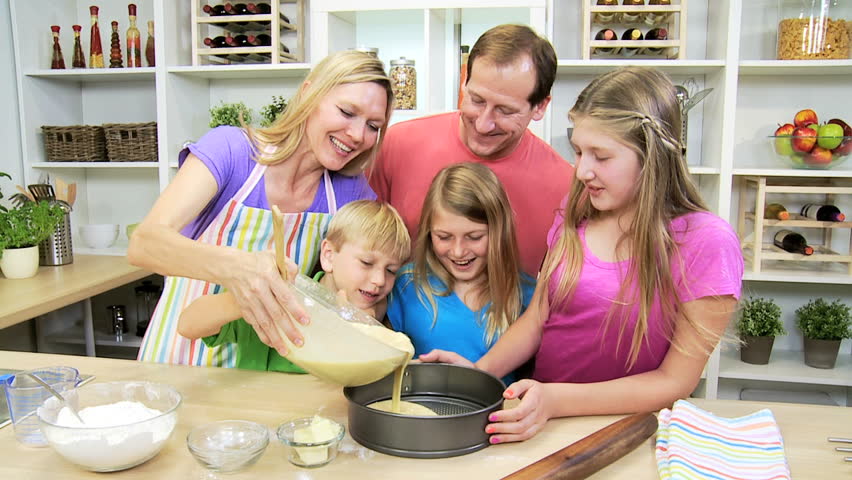
Blonde Caucasian Mom Teaching Family Stok Videosu (%100 Telifsiz ...

     We know every relationship is a unique and constantly evolving dynamic. You won't always have it right and that's okay because neither will your kiddo. Every day at Warrior's Way we are just striving to be better than the day before. Life in our homes is no different. So if this post has pointed out some weaknesses in your home now we have a focus to improve upon. And if you're already crushing these, than take some time to reflect on other lessons you can teach your child about healthy relationships. After all we can't teach our kiddos too much during this pivotal time in their life. You've got this parenting Warriors!

#RaiseAWarrior